
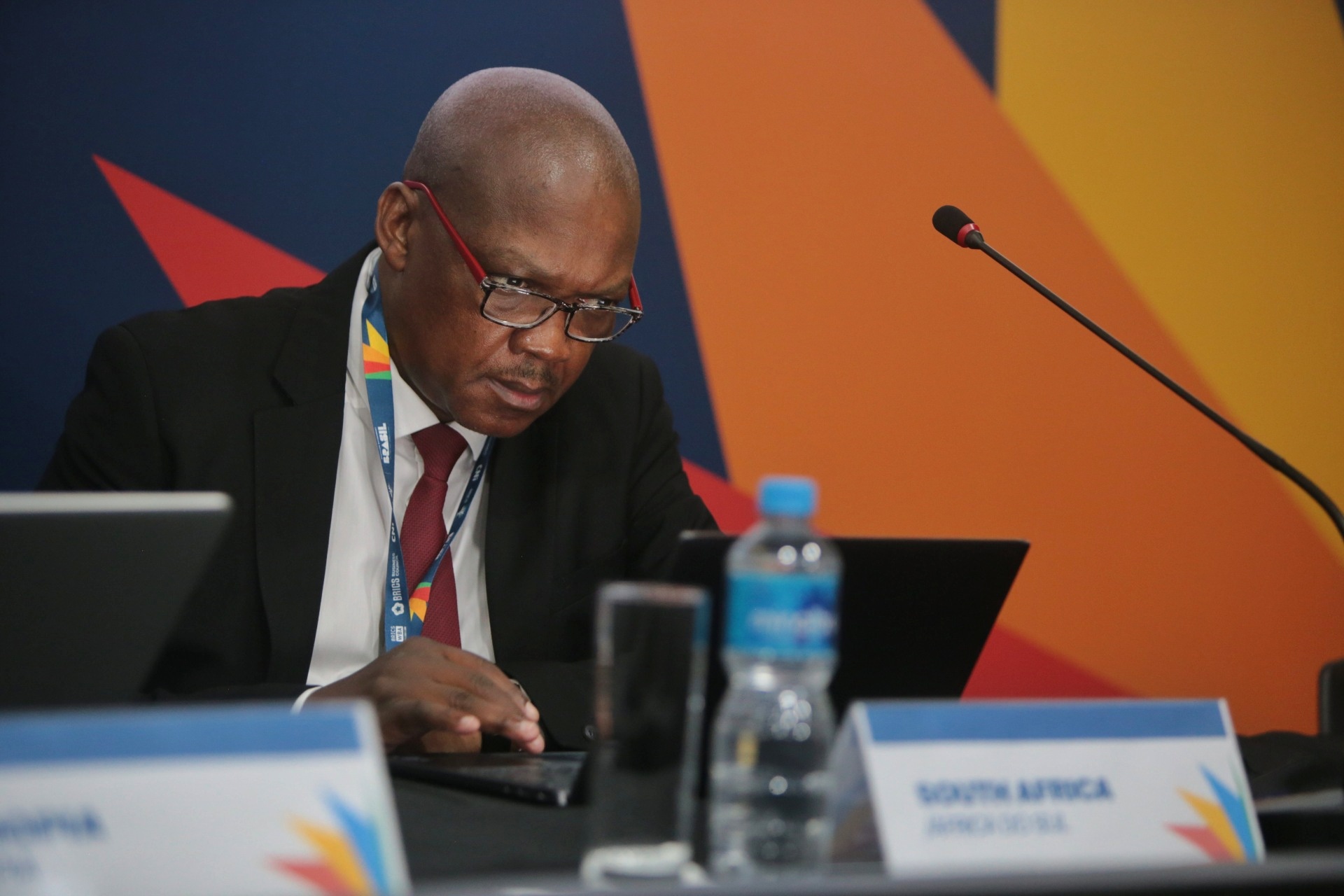
THE BRICS Business Forum convened on July 5 in Rio de Janeiro, Brazil – bringing together high-profile business leaders, policymakers and professionals from member countries to deliberate on persistent issues shaping the development agenda of the BRICS bloc.
The Forum, held alongside the annual BRICS Summit, serves as a vibrant platform for engagement between Brazil, Russia, India, China, South Africa and newly-joined members Egypt, Ethiopia, Iran, Saudi Arabia and the United Arab Emirates. With the aim of advancing co-operation in the face of global challenges, it brings together the efforts of member countries to promote an agenda based on innovation, sustainability and economic inclusion.
This significant gathering offers South African companies and organisations an exclusive opportunity to engage with international counterparts, exchange trade ideas, attract investment, forge strategic partnerships, and expand market reach across emerging economies.
Just energy transition
The BRICS Business Forum is intended to bring together top decision- makers to identify pragmatic answers to the challenges facing BRICS nations and the global economy.
Among the key contributors was Richards Bay Industrial Development Zone (RBIDZ) CEO, Thabane Zulu, who joined a delegation led by the Department of Trade, Industry and Competition (the dtic) as a member of the working group. In Brazil, he participated as a panellist in forums focused on renewable energy and strategies towards achieving zero carbon emissions.
As a member of the BRICS Working Group on Energy, Green Economy and Climate, Zulu represented RBIDZ’s commitment to prioritising energy as a catalyst for economic growth – both in South Africa and globally. Through strategic engagement platforms like the BRICS Forum, RBIDZ continues to advocate for a transformative socio-economic landscape driven by energy diversification and a just energy transition.
Comprehensive framework
During his panel discussion, Zulu highlighted the comprehensive framework guiding South Africa’s energy transition. “This framework comprises government, business and civil society, and emphasises practical implementation beyond hypothetical plans,” he stated.
He further underscored the importance of environmental legislation that ensures compliance across all energy projects, while acknowledging South Africa’s historical over-reliance on coal.
“In South Africa, we have made a firm commitment to decarbonisation. More than just signing agreements, we have developed a practical and inclusive framework to guide this process, involving the government, the private sector and civil society. Every new project in the country must undergo a thorough environmental assessment. This ensures that any development is climate-responsible and does not hinder economic growth.”
Importantly, Zulu further stressed the need for a just transition that maintains energy security, protects jobs and addresses social inequalities. “This includes reskilling and upskilling workers for renewable energy technologies and ensuring that no community is left behind to maintain a just transition,” he added.
Zulu’s remarks resounded with fellow panellists, who echoed the value of inclusive collaboration. The panel praised the active participation of public sector leaders, private enterprises, women, and youth in positioning emerging economies as key players in technology development and food security.
Meaningful progress
One panellist objected to unilateral and self-serving approaches; advocating instead for balanced partnerships between the Global South and North. Another emphasised the development from limited industrial capacity to a period of robust leadership, business engagement and social inclusion – expressing confidence that collective efforts across sectors would drive meaningful progress towards carbon neutrality. Zhao Haiying, executive vice president of China Investment Corporation, highlighted China’s crucial role in the global energy landscape. Representing 45% of the world’s population and 30% of global GDP, China has already met its 2030 target of 1 200 gigawatts of solar and wind power – six years ahead of schedule. Zhao emphasised China’s commitment to reducing costs, improving efficiency and making green energy more accessible.
Marianne Ghali, CEO of Qalaa Holdings and Grandview Investment Holdings, also commended the support of BRICS partners. Ghali highlighted Egypt’s fast-paced progress towards a green economy, citing the development of wind farms and substantial investment in solar energy. He emphasised the transformative potential of BRICS collaborations in advancing global decarbonisation.
Inclusive economic growth
Representing the RBIDZ Special Economic Zone and the province of KwaZulu-Natal, Zulu’s participation in this global dialogue underscores South Africa’s positive role in influencing a sustainable energy future and leveraging global platforms to drive inclusive economic growth.
The platform not only amplified RBIDZ’s voice in influencing the future of the energy sector, it also reaffirmed the organisation’s strategic commitment to attracting foreign direct investment into a conducive business environment.
With a robust investment pipeline exceeding R255 billion – comprising both operational projects and investors at various stages of development – the RBIDZ continues to play a critical role in driving economic growth in diverse sectors, notably energy.
Significantly, energy-related projects represent the largest share of investment value within the RBIDZ pipeline, offering strong prospects for improving national energy provision, bolstering security, and supporting South Africa’s transition to a more sustainable energy future.